Technology
The SERAPID guide to chain types for horizontal push-pull linear motion
Published on December 12, 2025
SERAPID Rigid Chain Technology
SERAPID Rigid Chain is an optimal solution for both pushing and pulling heavy loads. Utilizing electric power, our chain can move virtually any load over any distance. When not in use, the chain is stored in a compact magazine out of the way of the transfer path. We offer several types of horizontal chain, which will be determined by the scope of the application. Our engineering team will work with you to provide a solution to solve your linear motion challenge.
Examples of Use Cases:
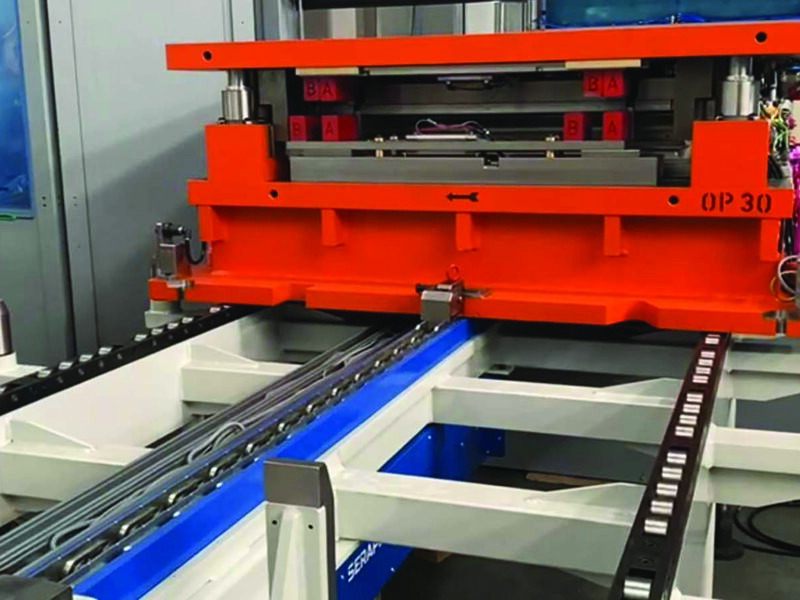
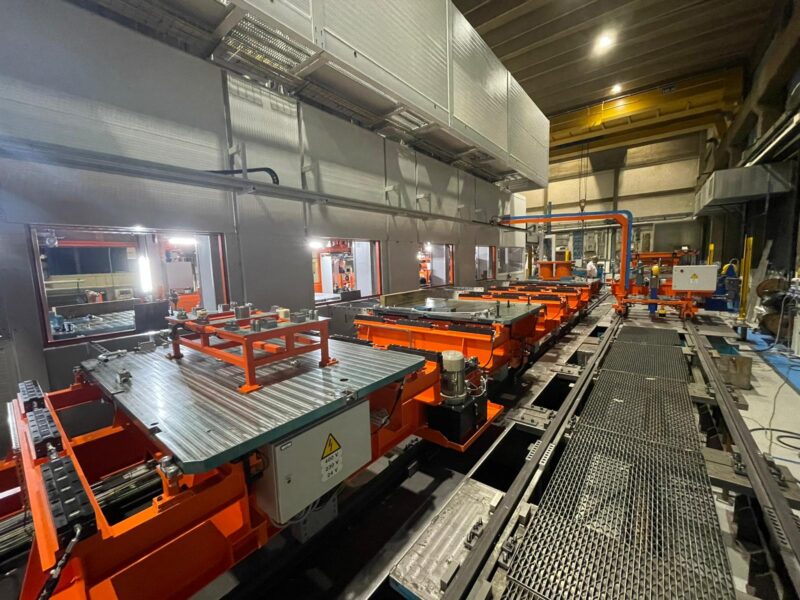
- Quick Die Change Systems move 36,000 lbs. with 0.5mm accuracy
- Nuclear Energy Solutions for construction and dismantling
- Multipurpose Venues moving walls, retractable roofs, and seating
Explore SERAPID Rigid Chain Technology Solutions >>
What is the correct chain for my project? Do I need to choose?
When researching SERAPID’s Rigid Chain offerings, it may seem complicated, and sometimes it is. But don’t worry, this article will help educate you and offer a foundation on which our team can build. Determine the maximum weight of your load and stroke distance, and our team will determine the appropriate chain series and type. Once you relate the details of your project to us, SERAPID will take care of the details. In other words, bring what you can to the table, and we’ll develop a solution and consultation free of charge.
The primary driver in choice of chain is the magnitude of force required, which will determine the type of chain required. We can move over half a million pounds over any distance with a single chain. The stroke (length of travel) also plays an important role, in relation to the specific requirements of the project. SERAPID standard Rigid Chain offers thrust capacities ranging from 5,000N to 160,000N.
Contact SERAPID Sales Engineers >>
Chain Size & Pitch
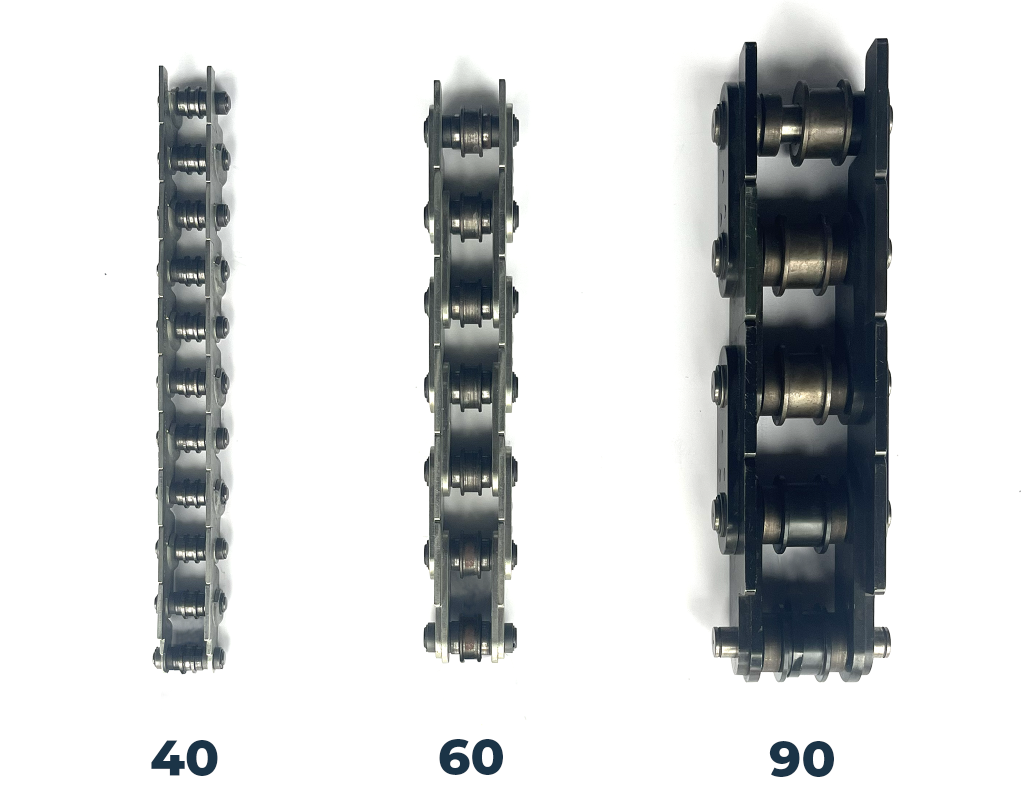
SERAPID’s standard chains are constructed with three different side plate pitch sizes, manufactured in either alloyed or stainless steel with a optional surface treatments to suit your application’s requirements. Rigid Chain comes in 40mm, 60mm, and 90mm pitch sizes.(pictured at right).**** The 40 series, at the bottom end of the capacity range, produces up to 7.500N of thrust. The 60 series offers up to 50,000N of thrust, and the 90 Series chains can produce nearly 160,000N of thrust. Any chain in the 90 Series can do the job of a 40 Series chain, but it is more economical to size the chain appropriately. Additional benefits of build-to-spec sizing come from weight and packaging. With our broad series of Rigid Chain, SERAPID can create a system that ensures the most efficient use of space and power in the most cost-effective package possible.
Chain Size and Capacity:
- 40mm – 7,500N thrust
- 60mm – 7,500N thrust
- 90mm – 7,500N thrust
Chain Options & Structure
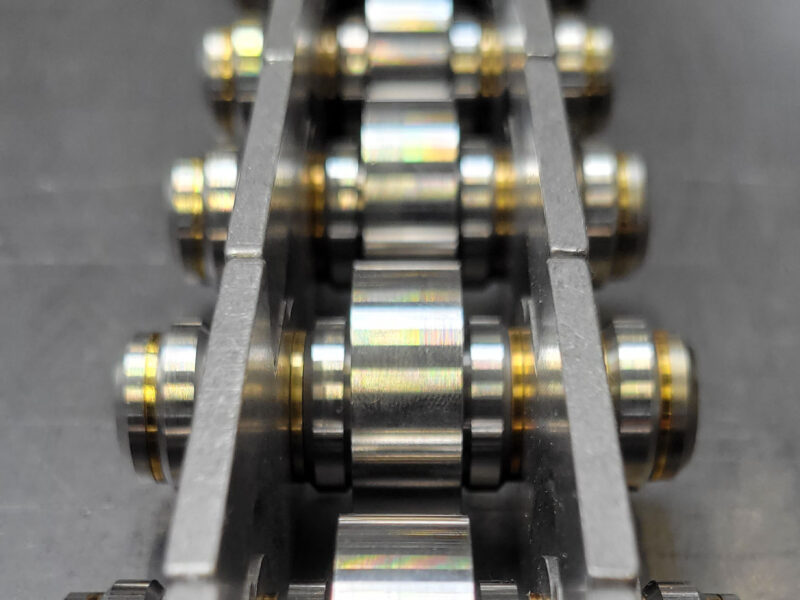
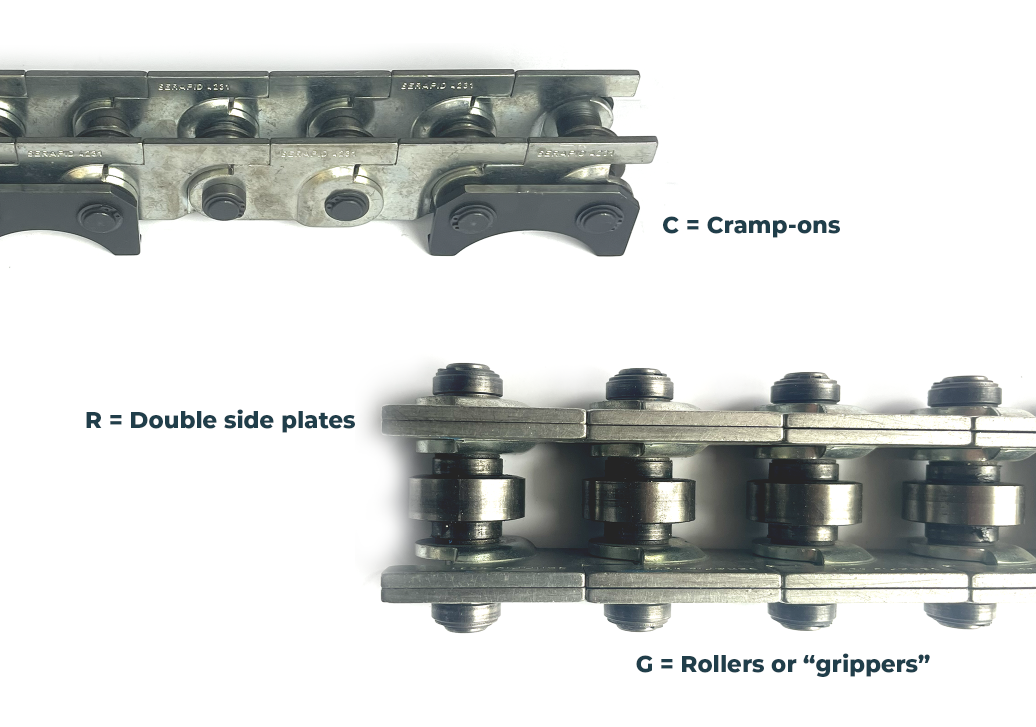
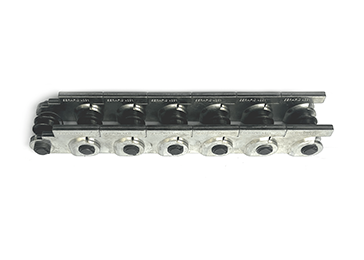
In addition to the size of the chain, SERAPID offers various options in the construction of the chain. The hardened, precision ground, alloy steel axles are available in several configurations. For example: A reinforced chain, designated with an “R”, is built with doubled side plates. Doubling the plates enhances the chain’s stability for unguided applications. A “G” indicates outboard rollers (aka “grippers”) for guided applications.
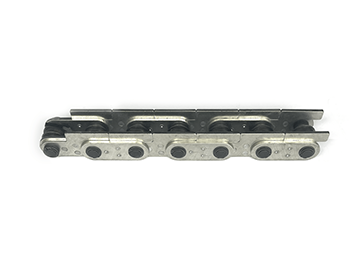
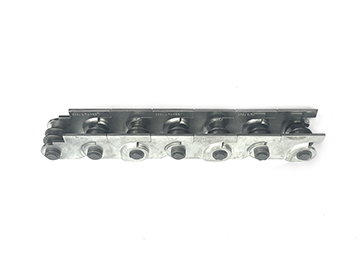
The basic plain chain, designated as “PS”, contains two plates with a specialized roller stack in between. An “S” chain is similar to the “PS” chain, with a slightly different structure and riveted plates. A longer axle provides for the next three variants: Rollers that enables the chain to run through a guide – “G”, a second set of plates to enhance unguided stability – “R”, or a set of cramp-ons, usually spaced every fourth link, along the chain’s length – “C”.
Chain Terms:
- PS – Basic SERAPID Chain “Plain”
- S – Similar to PS, but with riveted sides
- R – “Reinforced” chain with double plates
- G – Guided chain with rollers (or “grippers”) used with E-guide
- C – Guided chain with cramp-ons used with T-rail guide
Chain Options & Structure (continued)
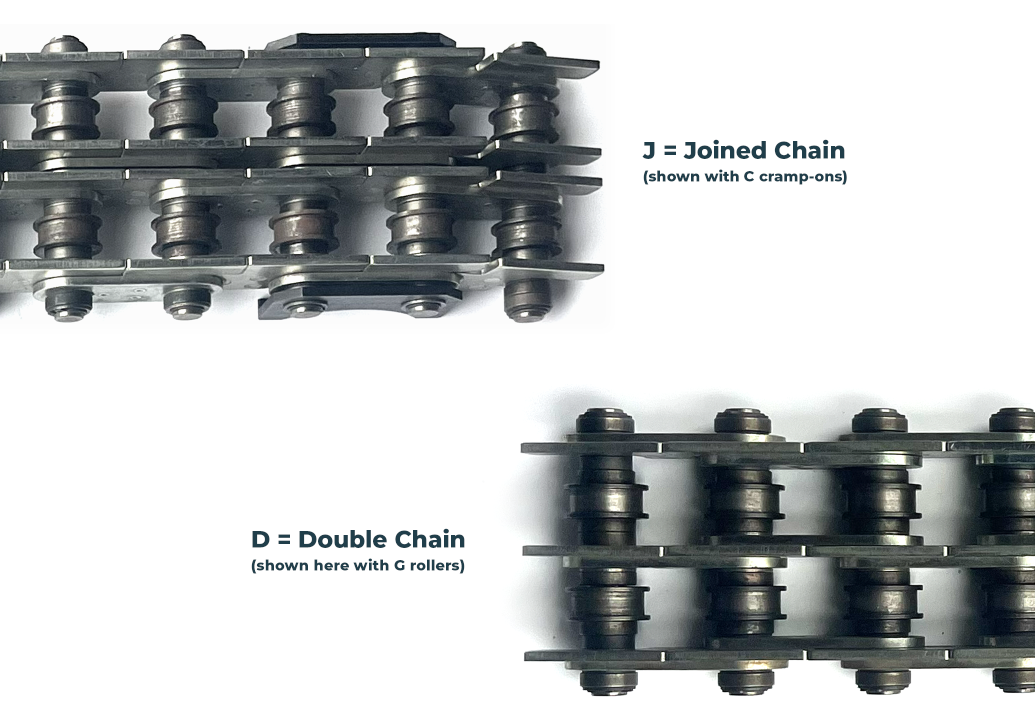
On the 60 and 90-pitch chain there are additional options of Duplex and Joined. These chains are used for the most demanding applications. A Duplex chain “D” assembles on a dedicated axle, essentially two chains sharing a common row of plates down the center, a joined chain “J” is literally two chains on a common axle. The advantage of wider chains is that they have more space for more sprockets to drive them, providing greater thrust and stability.
Chain Terms:
- D – Doubled chain with shared center
- J – Joined chain with 2 complete chains
E-Guides & T-Rail Guides
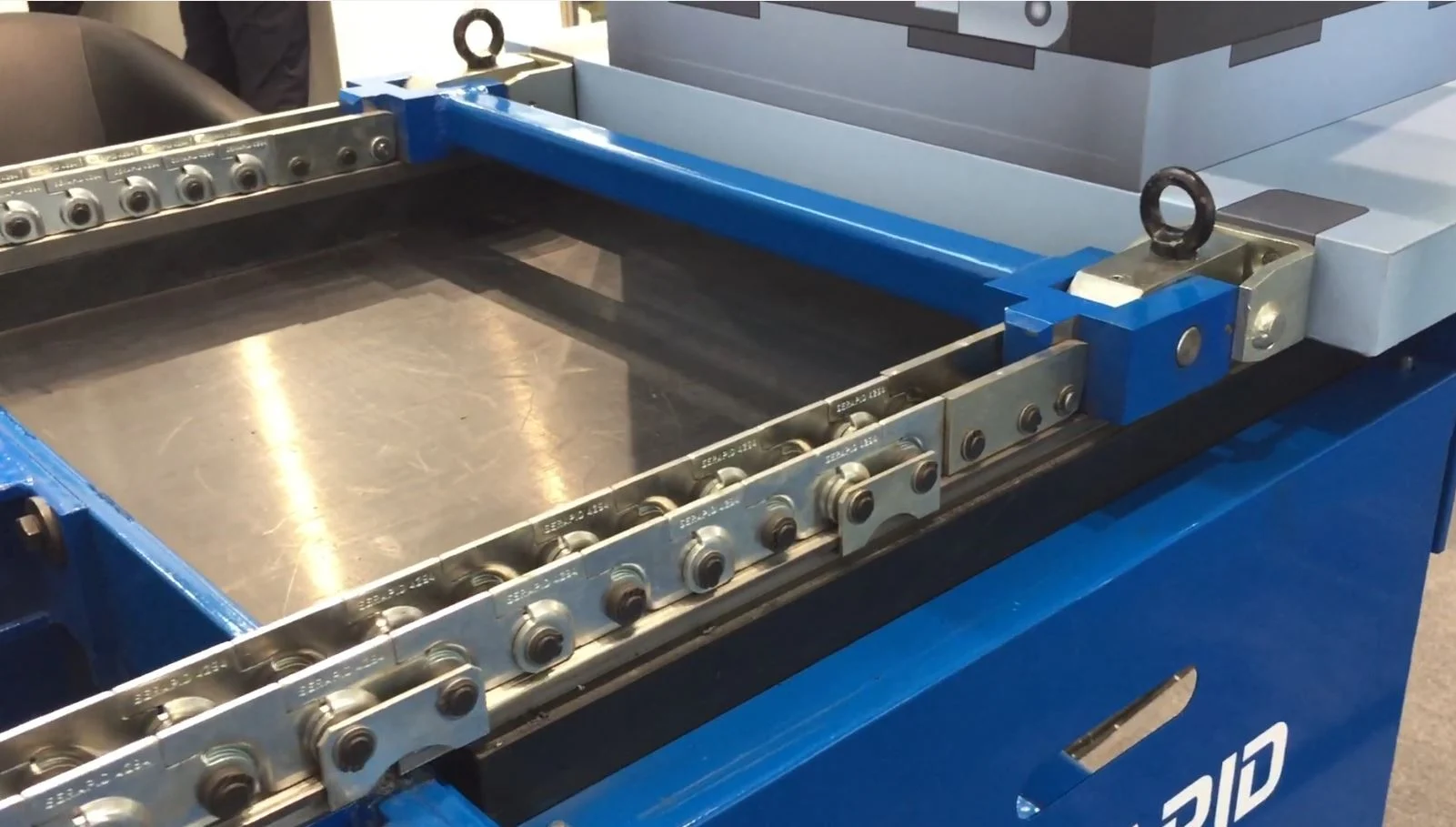
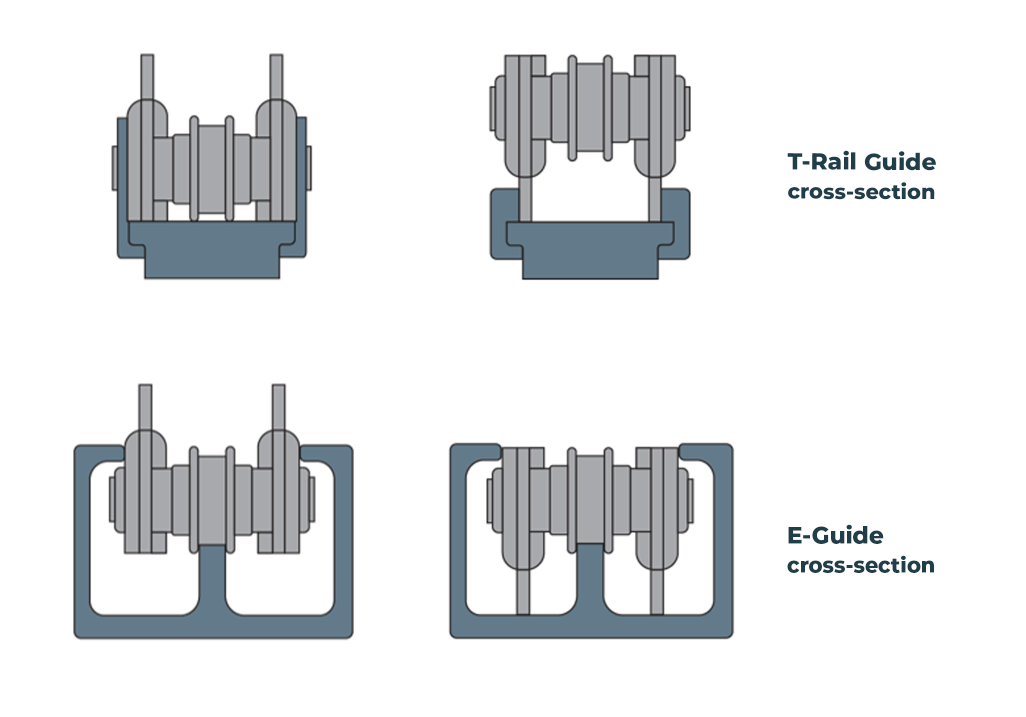
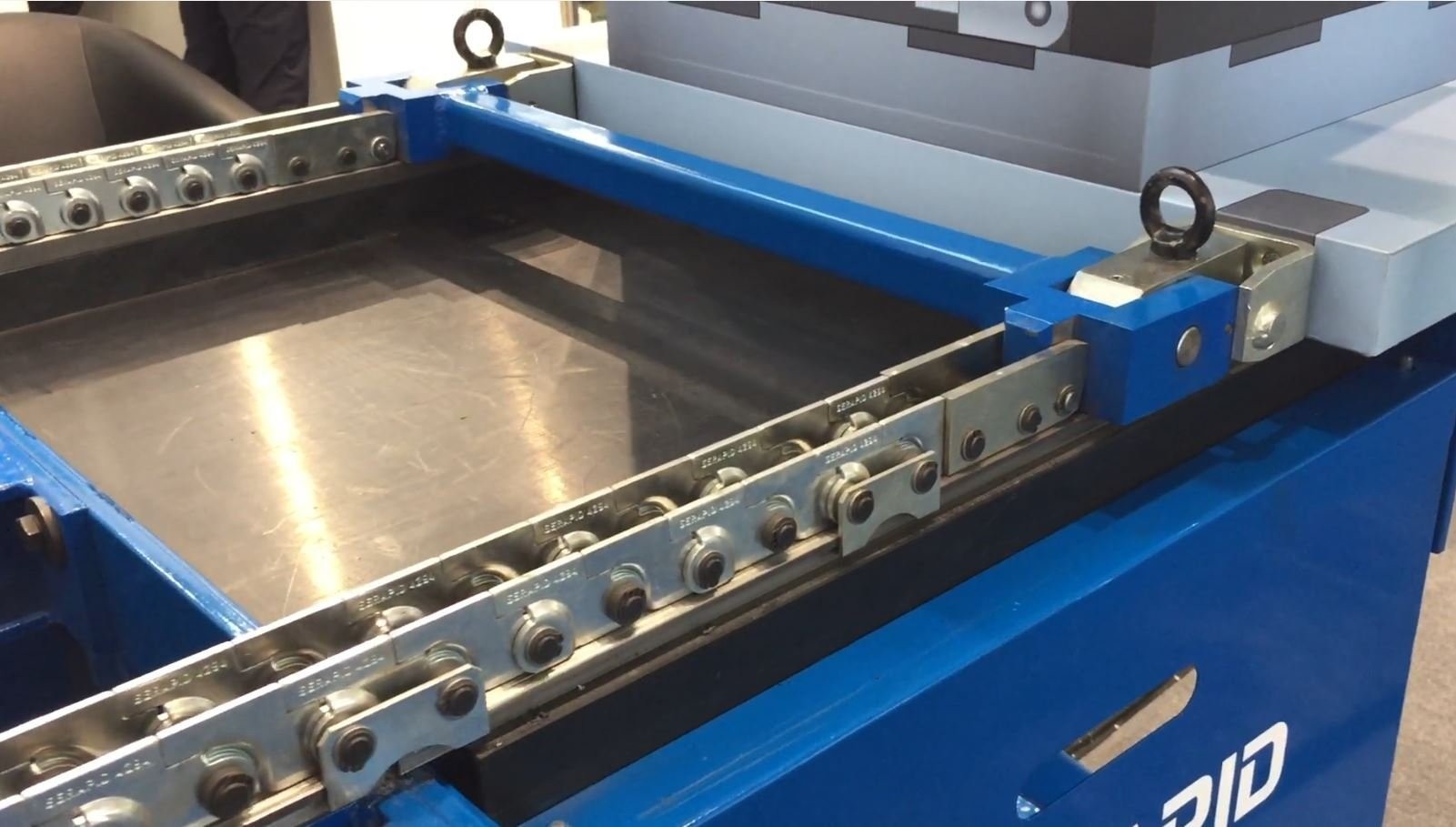
Guides provide additional stability for extended distance. There are two types of guides. One is an extruded, weldable steel channel with a cross section resembling an “E”. The other is a T-shaped steel rail. Both guides are available in various lengths and can be connected in succession over any distance. These guides can be affixed to movable elements to provide clear access, for example, in front of plant machinery. With the chain retracted, the guides can be folded out of the way.
The “E” guide is available for any chain with a G in the nomenclature. The “T-Rail” guide can only be used for chains equipped with cramp-ons, denoted by a “C” in the nomenclature. Cramp-ons are a set of outboard plates that reach below the chain and around the shoulders of the T-Rail guide.
Guide Types:
- E-Guide – For use with “G” type chain
- T-Rail Guide – For use with “C” type chain
Chain Orientation
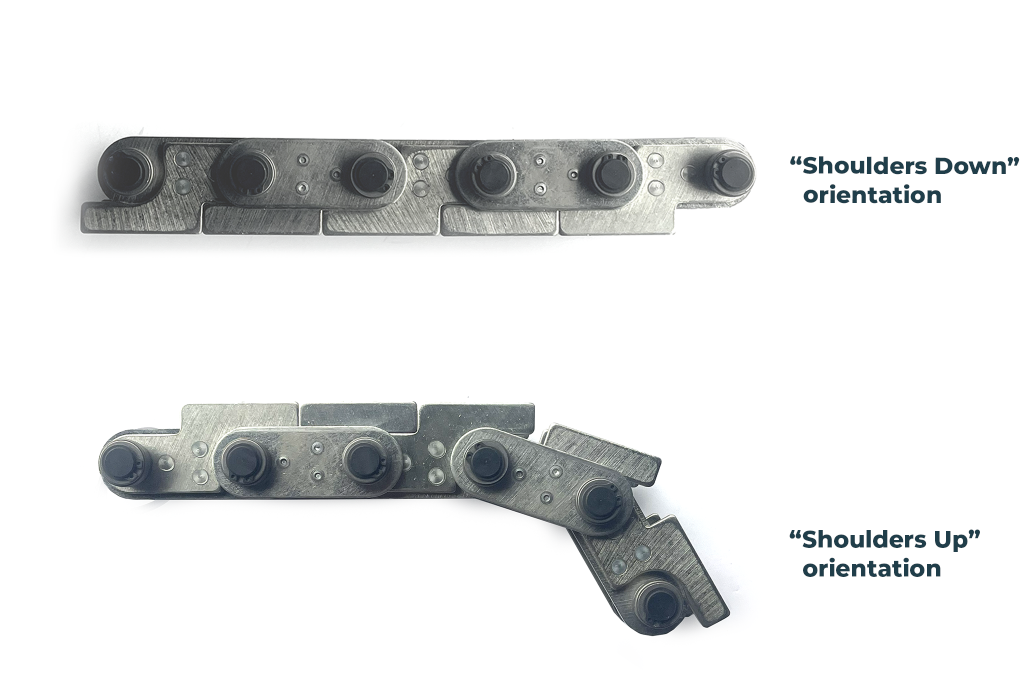
Shoulders Up or Shoulders Down
SERAPID chain can be oriented with either side up, depending on the application. We describe this as “shoulders up” or “shoulders down”. The chain will flex in the opposite direction of the shoulders. So with “shoulders up”, the chain will flex downwards into the magazine, with “shoulders down” the chain will flex upwards. Depending on the logistics of your application, the guides used, and the location of the magazine, we will determine the correct orientation.
See all SERAPID Horizontal Chain Types Pictured Below
Contact SERAPID HERE to determine the best chain for your application >>
 60 S chain 60 S chain |
 60 PS chain 60 PS chain |
|---|---|
 60 PSR chain 60 PSR chain |
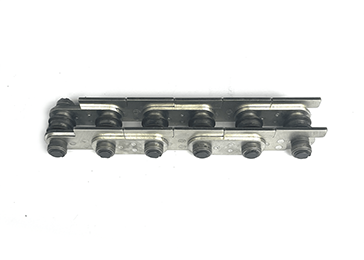 60 SG chain 60 SG chain |
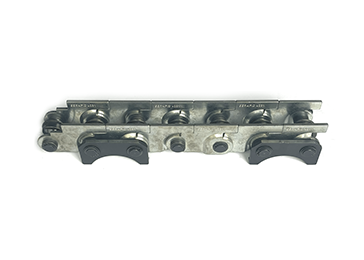 60 PSC chain 60 PSC chain |
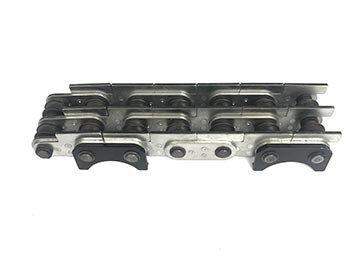 60 DC chain 60 DC chain |
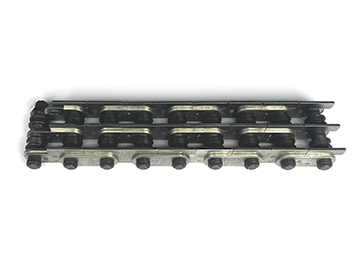 60 DG chain 60 DG chain |
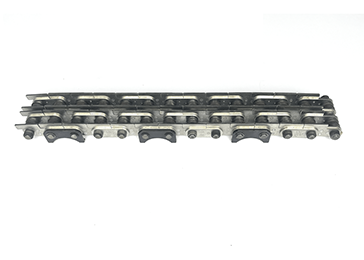 60 JC chain 60 JC chain |
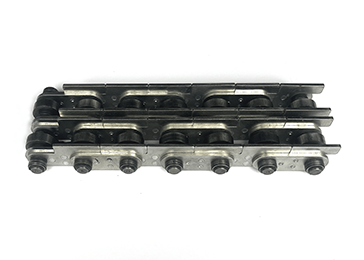 60 JG chain 60 JG chain |
SERAPID has over 50 years experience in Linear Motion Solutions utilizing Rigid Chain Technology.
Your SERAPID representative is your best source for determining what chain will work best for your project. Contact our team of knowledgeable Sales Engineers and make your vision a reality. We look forward to hearing from you!
Related articles