
Use Cases
DDA Lift Solutions: Delivering Step-Free Access Where Conventional Lifts Cannot
Creating truly inclusive buildings requires more than meeting regulations — it means ensuring every visitor can move through a space safely, comfortably, and independently. Today, step-free access is an essential component of modern building design and refurbishment projects. Whether upgrading a historic property, renovating a public building, or designing a new development, architects and building owners must provide accessible solutions that comply with current accessibility standards.
SERAPID’s innovative DDA lift solutions are specifically engineered to overcome the challenges that prevent conventional lifts from being installed. Powered by proprietary Rigid Chain Technology (RCT), SERAPID accessibility lifts provide reliable, space-saving vertical transportation where traditional hydraulic and traction lifts simply cannot fit.
Accessibility Without Compromise
The Equality Act 2010 places a legal obligation on building owners and operators to make reasonable adjustments that enable equal access for all users. Supported by Approved Document M and BS 8300, these requirements promote inclusive environments that accommodate people with disabilities, mobility impairments, and other accessibility needs.
While the objective is clear, implementation can be challenging. Many buildings were not originally designed to accommodate lift shafts, machine rooms, or deep excavations. Historic buildings, listed properties, transportation facilities, and constrained urban developments often present significant structural and architectural limitations.
This is where SERAPID platform lifts provide a practical and effective solution.
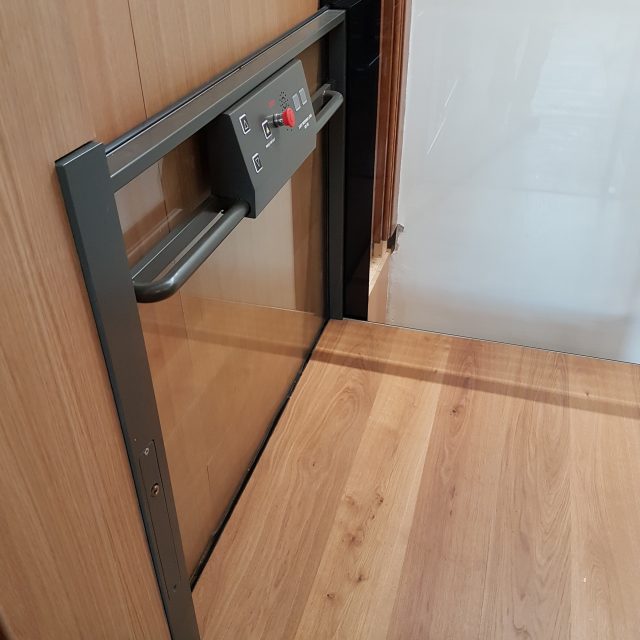
Key Advantages of Rigid Chain Technology
Rigid Chain Technology: The Foundation of Advanced Accessibility Lifts
At the heart of every SERAPID DDA lift is Rigid Chain Technology, an innovative electro-mechanical lifting system that forms a rigid lifting column from a chain stored compactly within the lift structure.
Unlike conventional hydraulic systems, RCT delivers exceptional lifting performance while minimizing space requirements and structural impact.
Key advantages include:
Many accessibility lift projects are constrained by the inability to excavate deep lift pits. SERAPID platform lifts require only a shallow pit, making them ideal for retrofit applications, heritage buildings, and locations where underground services or structural limitations prevent major excavation work.
Traditional lifts often require valuable floor space or rooftop plant areas for machine rooms. SERAPID’s self-contained design eliminates this requirement, maximizing usable building space while simplifying installation.
Because the system operates without hydraulics, there is no risk of oil leaks, contamination, or environmental damage. This makes SERAPID disabled access lifts particularly suitable for public spaces, museums, educational facilities, and conservation-sensitive buildings.
The compact design allows the lift to be integrated into confined or irregular spaces without significant building modifications. Rather than forcing the building to adapt to the lift, the lift adapts to the building.
SERAPID’s lifting technology transfers loads directly to the ground rather than imposing significant forces on surrounding walls or structures. This minimizes structural intervention and reduces installation complexity.
Why Rigid Chain Technology Is Ideal for Step-Free Access
Accessibility is about more than simply moving between floors. Users expect a safe, smooth, and dignified experience every time they use a lift.
Rigid Chain Technology delivers highly accurate positioning, allowing the platform to stop flush with each landing. This precise alignment eliminates trip hazards and provides seamless wheelchair access.
Unlike some hydraulic or sprung systems, the rigid lifting column does not compress or bounce when passengers enter or leave the platform. Wheelchair users, mobility scooter users, and pedestrians experience a firm, stable surface throughout the journey.
SERAPID accessibility lifts provide controlled, low-noise operation that enhances user comfort. This is particularly valuable in cultural venues, public buildings, libraries, healthcare facilities, and educational environments where noise reduction is important.
For accessibility infrastructure, reliability is critical. A lift that is unavailable effectively removes access altogether. SERAPID’s electro-mechanical design is engineered for long service life, low maintenance requirements, and dependable daily operation.
Applications for SERAPID Accessibility Lifts
Providing disabled access in historic buildings often presents unique challenges. Deep excavation, extensive structural alterations, and hydraulic systems may not be acceptable in conservation-sensitive environments.
SERAPID heritage building lifts offer a discreet solution that minimizes impact on protected architecture while delivering full step-free access. Churches, museums, town halls, universities, and historic civic buildings can benefit from accessible vertical transportation without compromising their character.
Libraries, galleries, theatres, concert halls, and civic buildings must welcome visitors of all abilities. SERAPID platform lifts integrate seamlessly into these environments while maintaining architectural integrity and ensuring reliable operation.
Rail stations, transport hubs, and interchanges increasingly prioritize step-free access as part of accessibility improvement programs. The compact footprint, low maintenance requirements, and robust design of SERAPID lifts make them particularly suited to high-traffic transportation environments.
Many commercial and public buildings lack sufficient space for a conventional lift shaft and machine room. SERAPID accessibility lifts provide a practical retrofit solution that enables compliance with accessibility regulations without major reconstruction.
For new developments, accessibility should be integrated from the outset. SERAPID platform lifts allow architects and designers to incorporate inclusive design principles while maintaining flexibility in building layouts and maximizing usable space.
Accessibility Through Minimal Intervention
One of the greatest benefits of a SERAPID DDA lift solution is how little the host building needs to change.
The combination of a shallow pit, machine-room-free design, oil-free operation, and ground-supported load transfer dramatically reduces the scope of structural modifications. This can simplify planning approvals, reduce installation costs, and preserve valuable architectural features.
For architects, consultants, conservation specialists, and building owners, this often makes the difference between an achievable accessibility project and one that faces significant design obstacles.
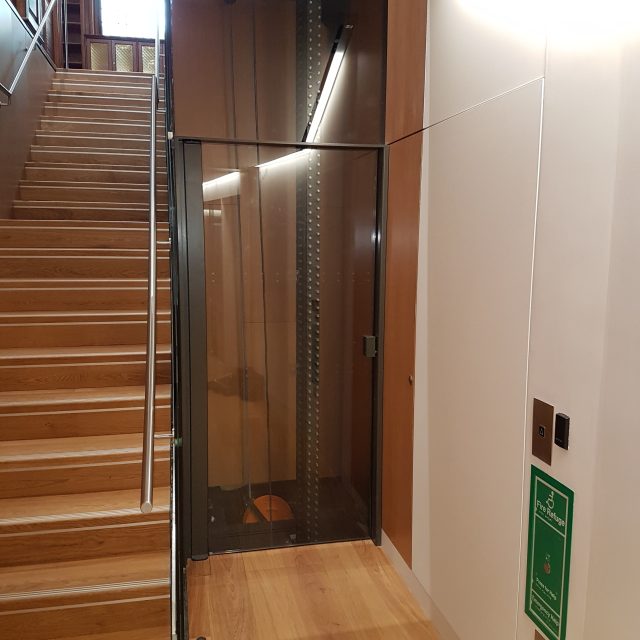
Flexible Delivery Options
Every project has unique requirements. SERAPID offers multiple levels of supply and integration support, ranging from Drive Train packages for specialist integrators to fully engineered Lift Packages and complete turnkey lift systems.
Whether customers require a component solution or a fully installed accessibility lift delivered under single-point responsibility, SERAPID provides the flexibility to match project needs while maintaining the same proven Rigid Chain Technology.
Future-Proof Your Building with SERAPID
As accessibility standards continue to evolve, providing reliable step-free access is becoming increasingly important for both compliance and user experience. SERAPID DDA lift solutions enable architects, building owners, and developers to overcome structural constraints and deliver inclusive access in even the most challenging environments.
From heritage buildings and transportation hubs to public facilities and modern developments, SERAPID accessibility lifts provide an innovative, space-efficient, and reliable solution for creating environments that truly offer access for all.
Contact SERAPID for your DDA lift project
Discuss your accessibility project with our engineers and get a tailored DDA lift solution.