
Use Case
Industrial Maintenance & MRO
Maintenance equipment carries an awkward obligation: it must never itself become the reason the plant is down. A lift serving a maintenance level, a spares store or an MRO workshop exists so that other things can be fixed — and every service interval it demands is an interval where it is the problem rather than the solution.
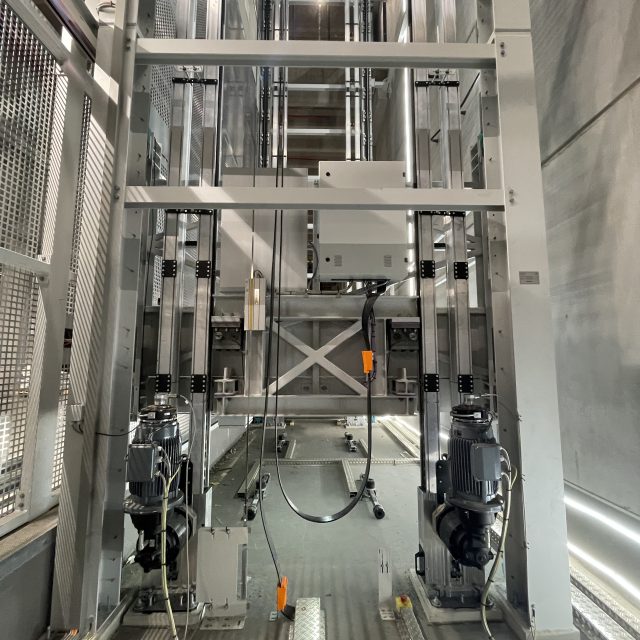
That is the whole argument for a purely mechanical drive. No hydraulic power pack, no fluid to change, no pressurised lines, no accumulator, no cooling. Standard industrial components, minimal maintenance, and a design life guaranteed to one million cycles.
Where the lift sits
| Application | The requirement |
| Spares and consumables stores | Heavy parts between store and plant level, often at odd hours |
| Maintenance and services levels | Access to plant rooms and service floors above or below the process |
| MRO workshops and hangars | Oversized components and ground support equipment between levels |
| Pit and underfloor plant | Movement from below without a machine room to accommodate |
| Tooling and equipment movement | Heavy, awkward, infrequent — the classic goods lift brief |
| Retrofit into operating assets | Installation without shutting the facility down |
Retrofit without a shutdown
The reason most maintenance lifts are difficult is not the lift — it is that the facility was built without one and now cannot close long enough to add one properly. No machine room, no borehole and a shallow pit reduce the installation to something that can realistically be phased around an operating asset, and the modular drive means components arrive ready to install rather than requiring extensive on-site build.
Working in the conditions that caused the problem
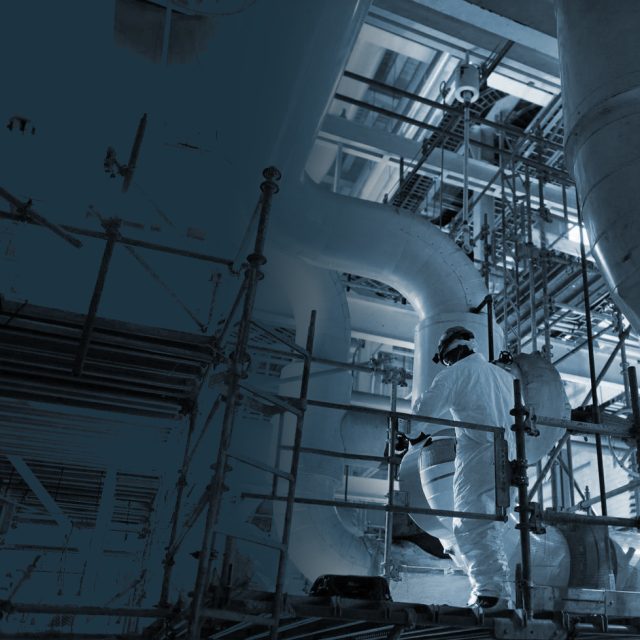
Maintenance access is needed precisely where conditions are worst: heat, dust, corrosion, contamination. The technology is specified for harsh environments and extreme temperatures, needs no cooling or heating plant, and offers chain treatments for corrosive and sanitary conditions — so the lift is not the next thing on the maintenance schedule.
Total cost, not purchase cost
For an MRO buyer the comparison is rarely capital cost. It is the sum of service visits, fluid changes and disposal, downtime, and the consequence of unavailability. This is where an electromechanical lift with an annual maintenance requirement separates from a hydraulic lift with a schedule — and where the one-million-cycle guarantee stops being a specification and starts being a budget line.
Frequently asked questions
Minimal. There is no hydraulic fluid to change and no pump to service, the drive is built from standard industrial components, and the system is guaranteed to one million cycles.
In most cases yes. Requiring no machine room and no borehole, and needing only a shallow pit, reduces installation to something that can be phased around an operating asset.
It is specified for harsh environments and extreme temperatures with no cooling or heating plant required, and chain treatments are available for corrosive and sanitary applications.
Most fall within the 1,500 kg to 10,000 kg part of the goods lift range, though MRO facilities handling large components frequently need the upper end or a bespoke car.
No. Facade access and BMU platforms are not lifts serving discrete landings — see the building maintenance unit content for those.
Contact our engineering team
Maintenance managers, facilities engineers and MRO operations leads: discuss your retrofit or replacement lift with our engineering team.