
Use Case
Energy & Renewables
Energy infrastructure has a lift profile that suits this technology almost exactly: heavy equipment, low duty cycles, difficult or hazardous locations, decades of expected service, and a strong institutional dislike of hydraulic fluid — near water, near a process, or simply because someone has to store, monitor and dispose of it.
Nuclear Energy
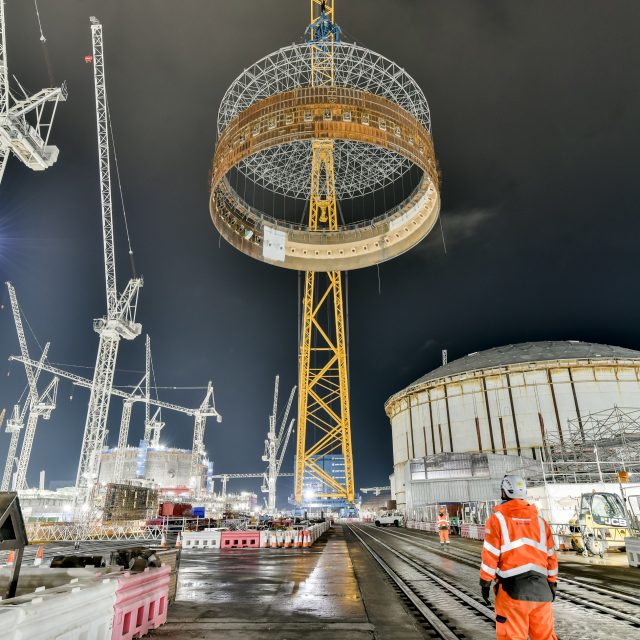
The evidenced sub-sector, and the one with its own page. SERAPID supplied the Flamanville EPR with a nuclear-safety-compliant elevator lifting waste containers into storage cells, where restricted height was the binding constraint and the compactness of the drive resolved it — 3.6 m stroke, 10,000 daN, 50 mm/s, around two hundred cycles a year.
Hydropower
Underground powerhouses present one of the more interesting lift problems in this sector. The machine hall is deep, the access adit is long, the equipment is heavy, and the whole installation sits in a wet environment where a hydraulic leak is a pollution incident in a watercourse and a consent problem for the operator.
A goods lift needing no borehole, no machine room and no hydraulic fluid removes the environmental exposure and the plant space requirement at once — in a location where excavating additional volume is exceptionally expensive.
Oil, gas and offshore
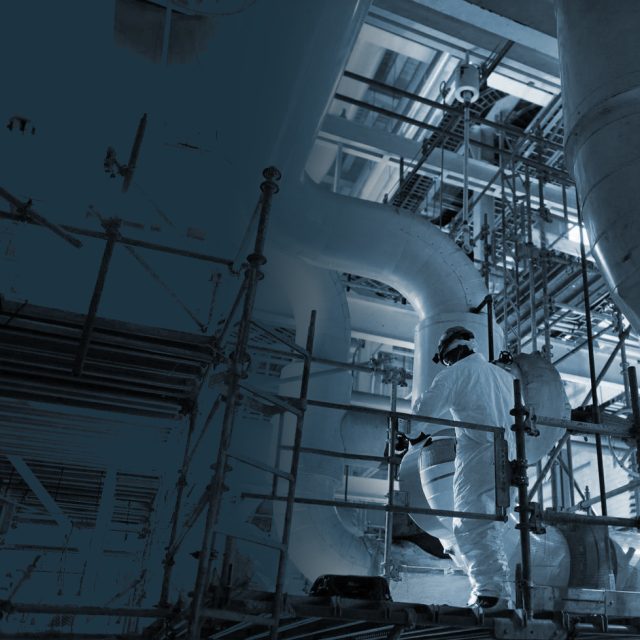
Offshore and process installations impose the constraints the technology was built for: severely restricted volume, corrosive atmospheres, difficult maintenance access, and a fire strategy that treats hydraulic fluid as a liability. A lift storing its drive flat in a shallow pit, with no fluid and minimal maintenance, addresses all four.
Battery production
Gigafactories behave more like intralogistics than like traditional energy plant: high duty cycles, tight cleanliness requirements, heavy modules moving between levels, and a strong aversion to hydraulic fluid near cells. The relevant products are the high-frequency goods lifts, and the relevant argument is the same one made to warehouse operators — availability, landing accuracy, and no fluid.
What is consistent across all of them
| Constraint | How a rigid chain lift answers it |
| Hydraulic fluid unacceptable | No fluid, no leak path, no disposal obligation |
| Excavating space is expensive | No machine room, no borehole, shallow pit |
| Remote or hazardous location | Minimal maintenance; purely mechanical construction |
| Very low duty, very long life | Nothing degrading between cycles; 1 million cycle guarantee |
| Heavy equipment movement | Goods lifts to 25 t; truck lifts to 60 t |
| Corrosive atmosphere | Stainless construction and chain treatment options |
Frequently asked questions
Yes. Nuclear Energy sector has its own dedicated page.
The fluid is a liability. Near water a leak is a pollution incident; in a process it is contamination; and in every case the fluid must be stored, monitored and disposed of. An electromechanical lift removes all of it.
A lift needing no machine room and no borehole, because excavating additional volume underground is exceptionally expensive — and one with no hydraulic fluid, because the installation is wet.
It is particularly well suited. A lift running a few hundred cycles a year has nothing degrading between operations — no fluid, no pressurisation, no seals under standing load.
Goods lifts from 1,500 kg to 25,000 kg as standard, with truck lifts continuing to 60,000 kg and bespoke systems beyond.
Discuss your energy infrastructure lift project
Nuclear, hydropower, oil & gas, offshore and battery plant: our engineering team supports specification and delivery worldwide.