
Use Case
Architecture & Special Buildings
Some buildings will not accept a lift. A listed façade, a protected interior, a foundation that cannot be cored, a floor plate with no room for a machine room, a structure that will not carry new loads at high level — and, running through all of it, a conservation officer whose default position on new plant is no.
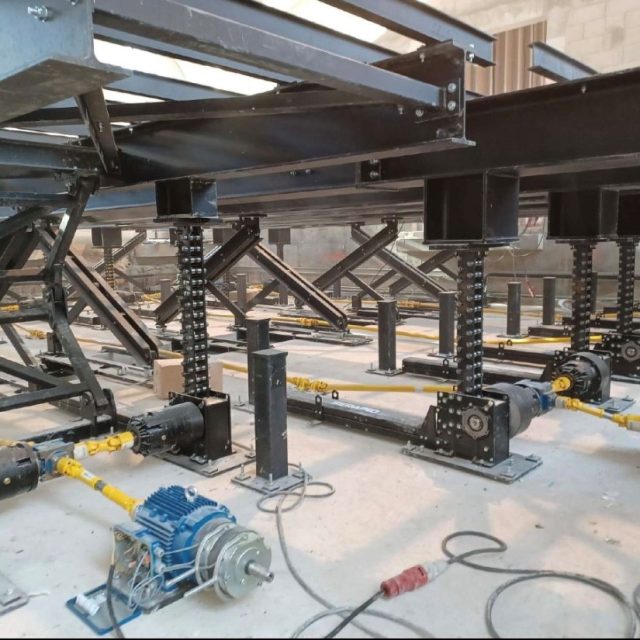
The reason rigid chain appears so often in this work is that it removes most of the things being objected to. No machine room. No borehole. A shallow pit. The load resolves into the foundations rather than being hung from the historic structure, and the shaft walls can frequently be built lighter than a traction or hydraulic equivalent would require.
Old universities, listed buildings, heritage estates
The recurring problem is that we cannot cut what we would need to cut. Every conventional lift technology asks for something the building is protected against giving — a borehole through an archaeologically sensitive floor, a plant room in a space with protected finishes, or new point loads on a roof structure that was never designed for them.
Where full compliance with the lift standard is physically impossible because the building prevents it, SERAPID Lift Systems has unrivalled experience of delivering the lift anyway — working with Notified Bodies and producing detailed design files supported by essential health and safety requirements to achieve certification. On heritage projects that capability is frequently the difference between a scheme that gains consent and one that does not.
Which lift for which brief
| Brief | Lift type | Note |
| Accessible visitor circulation | Passenger lift | EN 81-20 / EN 81-41 routes; retrofit into existing shafts |
| Collections, catering, servicing | Goods lift | 1.5–25 t; goods-only or attended |
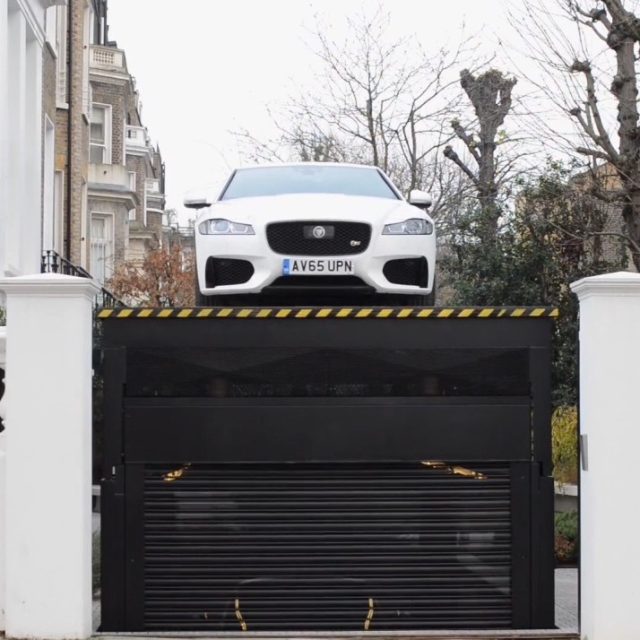
| Private residence vehicle access | Car lift | 2.5–5 t; high-specification finishes |
| Vehicle access on a constrained urban site | Car lift | Replaces a ramp consuming more plot than it serves |
| Lift rising through a finished floor | Bespoke | Floor closes behind; needs precise position holding |
| Anything the standard will not permit | Bespoke | Certification agreed with a Notified Body |
Private residences
The high-end residential market pulls the same technology in a different direction. Duty cycles are very low, finish expectations are exceptional, and silence is assumed rather than specified. Car lifts, concealed lifts rising through finished floors and discreet passenger lifts all run on the same drive as a 60-tonne truck lift — configured, finished and controlled entirely differently. Delivered examples include a high-specification two-car lift in the UK and high-specification cabin interiors in Germany.
Specified on noise, not on load
Architectural briefs are written differently from industrial ones. The binding requirements are usually noise, speed and vibration rather than tonnes and cycles, because in an occupied building — a house, a gallery, a college — the acoustic performance of the mechanism is a harder requirement to meet than the capacity. SERAPID solutions are designed to those constraints, and the absence of a hydraulic power pack is where most of the advantage comes from.
Frequently asked questions
Frequently yes, where other technologies cannot be. No machine room, no borehole and only a shallow pit mean substantially less intervention in the protected fabric, and loads resolve into the foundations rather than into the historic structure.
This is an established part of the service. SERAPID works with Notified Bodies and produces detailed design files supported by essential health and safety requirements to achieve certification where full compliance is physically impossible.
There is no hydraulic power pack, which is the source of most lift noise. Architectural installations are designed to a stated noise, speed and vibration specification rather than to load alone.
Yes. Bespoke systems have been delivered that rise through opening floors, which depends on the drive holding position precisely under uneven load — exactly what the interlocked chain column does.
Yes. Low-cycle domestic duty is well within the technology’s capability, and installations include two-vehicle lifts and high-specification cabins for private clients.
Contact our engineering team
Architects, conservation officers, private clients and specialist contractors: discuss your heritage or special building lift with our engineering team.